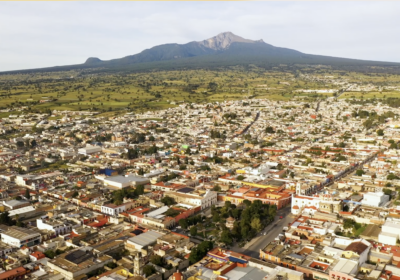

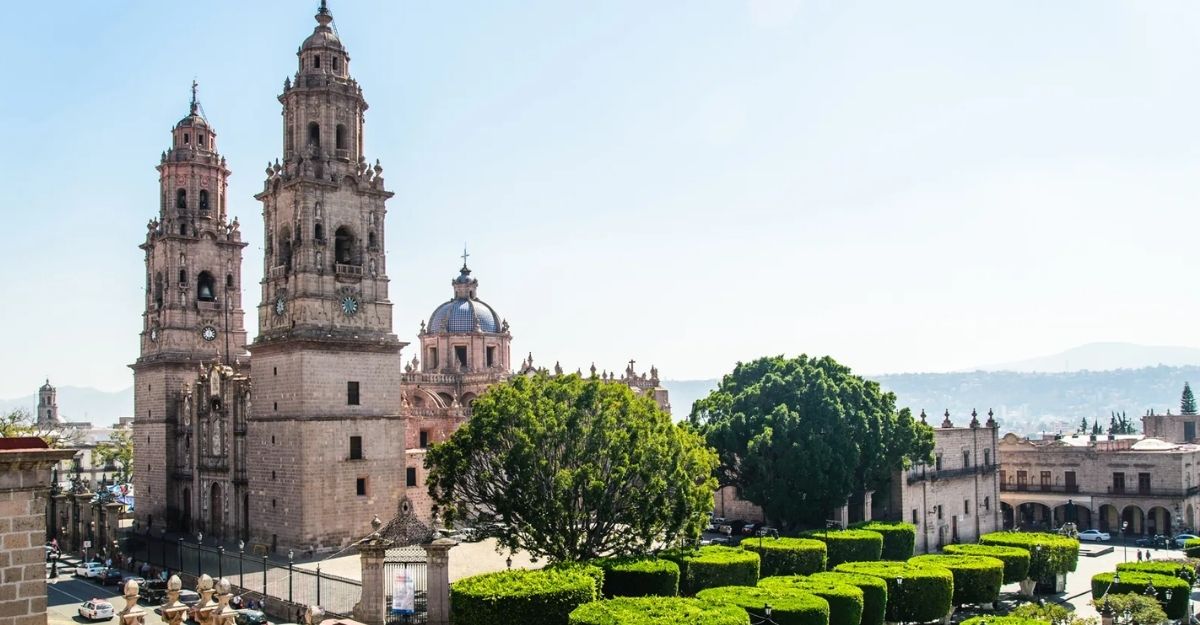
The state of Michoacán is one of Mexico's most complete tourist destinations thanks to its cultural, historical, and natural wealth. Renowned for its tourist attractions, cuisine, traditions, and magical towns, this destination offers unique experiences for travelers seeking nature, architecture, cultural events, and recreational activities throughout the year.
From colonial cities to natural landscapes and traditional festivities, Michoacán ranks as one of the best destinations to travel to in Mexico in 2026.
Follow our accounts on Facebook and Instagram to stay up to date with the latest news.
What historical sites should you visit in Michoacán?
1. Ihuatzio Archaeological Site
The Archaeological Zone of Ihuatzio, Michoacán, is one of the most important historical sites in western Mexico and a must-see destination for those seeking to learn about the history of the Purépecha empire. This place stands out for its size, monumental remains, and cultural value, positioning itself as one of the main tourist attractions near Lake Pátzcuaro.
Located in the community of Ihuatzio, this archaeological site is part of the region's pre-Hispanic heritage and represents a key destination for cultural tourism in Michoacán.
Why visit Ihuatzio?
- It was one of the main capitals of the Purépecha empire.
- It reached an approximate area of 150 hectares in its heyday.
- Eighty-four monumental sculptures have been identified, seven of which are on display.
- It is one of the most important archaeological sites in western Mexico.
- Location: Ihuatzio, Michoacán.
- Days and hours: Monday to Sunday | 10:00 a.m. to 4:00 p.m.
- Cost:
- General admission: $65 pesos.
- Teachers, students, children under 13, and INAPAM members: free admission.
*Free admission for Mexican citizens on Sundays.
2. La Nopalera Archaeological Site
The La Nopalera Archaeological Site is one of the most interesting archaeological sites in Michoacán. It is located northwest of Lake Cuitzeo, on a hill, and is notable for its advanced pre-Hispanic engineering.
The site was reinforced with retaining walls and structural fillings to prevent the ground from collapsing, which is particularly visible in the southwestern sector. It is a clear example of the construction expertise of pre-Hispanic cultures in the region.
- Location: Mezquite, Nopalera, 58820 Huandacareo, Michoacán.
- Days and hours: Tuesday to Sunday | 9:30 a.m. to 5:30 p.m.
*Closed on Tuesdays. - Cost:
- Admission: $65 pesos.
- Teachers, students, children under 13, and INAPAM members: free admission.
*Free admission for Mexican citizens on Sundays.
3. San Felipe de los Alzati Archaeological Site
The San Felipe de los Alzati Archaeological Zone is one of the most important archaeological sites in eastern Michoacán. During its heyday, it covered an area of approximately 52 hectares, establishing itself as a strategic point in pre-Hispanic Mesoamerica.
This site stands out as the most important archaeological complex in eastern Michoacán and the only one in the region administered by the National Institute of Anthropology and History (INAH) that is open to the public. Its location allowed for territorial control and the development of key settlements in the area, making it an ideal destination for cultural tourism in Michoacán today.
- Location: Zitácuaro, Michoacán.
- Days and hours: Monday to Sunday | 9:00 a.m. to 6:00 p.m.
- Cost:
- General admission: $145 pesos.
- Mexican nationals and foreign nationals residing in Mexico: $80 pesos.
What activities can you do in Michoacán?
1. El Rosario Monarch Butterfly Sanctuary
The El Rosario Monarch Butterfly Sanctuary is one of Mexico's most visited ecotourism destinations and forms part of the Monarch Butterfly Biosphere Reserve, declared a World Heritage Site by UNESCO. This sanctuary receives millions of monarch butterflies each year during their migration from Canada and the United States to the oyamel forests of Michoacán.
The monarch butterfly in Michoacán is the star of one of the world's most impressive migrations, traveling up to 5,000 kilometers to reach Mexican sanctuaries between November and March. During this period, visitors can observe massive colonies covering trees and creating an incomparable natural spectacle.
What to do at El Rosario Shrine?
- Hiking through oyamel and pine forests.
- Horseback riding (optional, at an additional cost).
- Local guides to learn more about migration.
- Local cuisine and crafts at the end of the tour.
It is one of the most sought-after destinations for viewing monarch butterflies in Mexico and practicing ecotourism.
- Location: Manzana Rancho Escondido, Mineral de Angangueo, Michoacán.
- Season: November to March | 9:00 a.m. to 5:00 p.m.
- Cost:
- Adult: $150.
- Children under 12: $100.
- Parking: $100.
El Rosario Sanctuary is an unmissable experience if you are looking for nature tourism in Michoacán and want to witness the unique spectacle of the monarch butterfly migration.
2. Urandén Springs
The Urandén Springs are one of the most visited tourist attractions near Lake Pátzcuaro, ideal for those seeking ecotourism, nature, and unique experiences in Michoacán. This destination offers a canoe trip through crystal clear waters that allows you to discover restored springs and breathtaking natural landscapes.
Canoe trip through the Urandén Springs
The trip takes approximately 45 minutes and is done in traditional canoes guided by local residents. During the trip, you will see five main springs:
- The Rebirth.
- The Devil.
- Los Sauces.
- Passions.
- Gateway to Heaven.
This activity is ideal for enjoying nature tourism in Michoacán, observing the ecosystem, and connecting with the tranquility of the surroundings.
- Location: Urandén, municipality of Pátzcuaro, Michoacán.
- Days and hours: Tuesday to Sunday from 9:00 a.m. to 5:00 p.m.
*Closed on Mondays. - Cost:
- Canoe tour: $50 pesos (minimum age: 2 years old).
- Walking tour: $10 pesos.
It is recommended to wear comfortable clothing and adhere to the established schedules.
3. Paricutín Volcano
The Paricutín Volcano is considered the youngest volcano on the American continent and one of Michoacán's main tourist attractions. It is located between San Juan Parangaricutiro and the community of Angahuan, in the Purépecha region.
On February 20, 1943, farmer Dionisio Pulido witnessed the earth opening up on his plot of land, spewing steam and rocks. Thus began the formation of the volcano, whose activity lasted nine years (1943–1952). The lava advanced nearly 10 kilometers, with no human casualties thanks to the timely evacuation.
Today it is an ideal destination for adventure tourism in Michoacán, hiking, and horseback riding. It also offers unique views of the ancient temple of San Juan, partially covered by lava.
4. Route of Magical Towns
The Michoacán Magical Towns Route is one of the best tourism experiences in Mexico. This tour allows visitors to discover traditions, cuisine, history, and nature, positioning the state as one of the most sought-after destinations for cultural travel.
Currently, Michoacán has nine Pueblos Mágicos(Magical Towns), ideal for exploring on a tourist route.
List of Magical Towns in Michoacán
- Pátzcuaro: One of the most visited destinations, famous for the Day of the Dead and Lake Pátzcuaro.
- Tlalpujahua: A destination famous for its Christmas baubles and colonial architecture.
- Tzintzuntzan: Important historical area of the Purépecha empire overlooking Lake Pátzcuaro.
- Angangueo: Famous for its proximity to the Monarch Butterfly Sanctuary and its mining heritage.
- Jiquilpan: Renowned for its architecture, murals, and cultural heritage.
- Tacámbaro: Surrounded by nature, forests, and waterfalls.
- Cuitzeo del Porvenir: Notable for its former Augustinian convent and its location next to Lake Cuitzeo.
- Paracho de Verduzco: World capital of the guitar, ideal for artisan tourism.
- Santa Clara del Cobre: Known for its tradition of copper craftsmanship.
What events to attend in Michoacán
Morelia International Film Festival 2026
The Morelia International Film Festival (FICM) will celebrate its 24th edition from October 16 to 25, 2026, in Morelia, consolidating its position as one of Mexico's most important film festivals. It brings together internationally renowned directors, actors, and producers to present national and international premieres, with both in-person and virtual screenings.
Cinema, tourism, and culture in Morelia
During FICM 2026, visitors tour the historic pink quarry center, enjoy local cuisine, and stay in hotels in the heart of the city. They can also visit the first Cinépolis complex, the festival's iconic venue.
The Morelia International Film Festival promotes cultural tourism in Michoacán and positions the city as a benchmark for cinema in Latin America.
K’uínchekua 2026 in Tzintzuntzan
The K'uínchekua 2026 is one of Michoacán's most iconic cultural events, featuring traditional dances, music, singing, and ancestral ceremonies that represent the identity of the indigenous peoples. This show brings together the best of cultural heritage on a single stage, making it an unmissable experience for tourists and lovers of Mexican traditions.
The event will take place from March 12 to 15, 2026, at the Las Yácatas Archaeological Site, located in the Magical Town of Tzintzuntzan. The first presentation will be exclusively for local communities, while the other days will be open to the public with tickets available on the official state tourism website.
The K'uínchekua is considered one of the best cultural experiences in Michoacán, as it allows visitors to learn about the state's roots, traditions, and artistic wealth in a unique historical setting.
Which museums to visit in Michoacán?
Discover the best museums in Morelia and Michoacán to learn about their history, cuisine, crafts, and natural wealth. This guide brings together must-see venues with key information on location, opening hours, and attractions to help you plan your visit.
1. Candy Museum
Founded by the company Dulces Morelianos Calle Real, this museum preserves the history of Morelia's ate and Michoacán's traditional sweets. It covers everything from pre-Hispanic cuisine to conventual production in colonial times.
What to see at the Candy Museum?
- Colonial kitchen with artisanal ate demonstration.
- Models of convents, mansions, and early factories (1940s).
- Old photo gallery of Morelia.
- 19th-century carriage courtyard and historical projection.
- Location: Av Francisco I. Madero Ote 440, Historic Center of Morelia, 58000 Morelia, Michoacán.
- Days and hours: Monday to Sunday | 10:00 a.m. to 8:00 p.m.
- Cost:
- General admission: $30 pesos.
- Children: $25 pesos.
2. Manuel Martínez Solórzano Natural History Museum (MUHNA)
A science outreach center founded by the Universidad Michoacana de San Nicolás de Hidalgo in 1986. It offers exhibitions on biodiversity, ecosystems, and natural sciences in Michoacán.
Featured rooms and exhibitions
- "Like a fish in the MUHNA": representative fish of the state.
- Birds, reptiles, soils, wood, and feather art.
- Monarch Butterfly and Hummingbird Exhibition.
- Location: Av. Ventura Puente, Bosque Cuauhtémoc 23, Centro, Morelia, Michoacán.
- Days and times:
- Monday to Friday | 9:00 a.m. to 4:00 p.m.
- Saturday and Sunday | 11:00 a.m. to 6:00 p.m.
- Cost: General admission: $50 pesos.
*Free admission on Saturdays and Sundays.
3. Morelos House Museum
Located in the center of Morelia, it was the residence of José María Morelos y Pavón, author of "Los Sentimientos de la Nación" (The Feelings of the Nation). It displays documents and historical objects from the independence movement.
- Location: C. La Corregidora 113, Historic Center of Morelia, 58000 Morelia, Mich.
- Days and hours: Monday to Sunday | 10:00 a.m. to 7:00 p.m.
- Cost: Free.
4. Michoacán Museum of Handicrafts
Located in the former convent of San Buenaventura, it houses pieces that have won state competitions and exhibits pottery, maque, textiles, wood, and gold-laminated lacquer. It also has a shop and a specialized library.
- Location: Fray Juan de San Miguel 129, Plaza Valladolid, Historic Center of Morelia, Morelia, Michoacán.
- Days and hours: Monday to Sunday | 10:00 a.m. to 6:00 p.m.
- Cost: Free.
5. Corn Museum
Located in Senguio, this museum promotes the cultural identity of corn and reflects on the consumption of genetically modified corn. It features rooms on Mesoamerican worldview, traditional planting, and culinary uses.
- Location: San Antonio, first section, km 2, Tupátaro–Chincua road, Senguio.
- Days and hours: Monday to Sunday | 10:00 a.m. to 6:00 p.m.
- Cost: Free.
What dishes should you eat during your visit to Michoacán?
Michoacán's cuisine is considered one of the most important in Mexico. In 2010, UNESCO recognized traditional Michoacán cuisine as Intangible Cultural Heritage of Humanity, thanks to its ancestral recipes, native ingredients, and the legacy of traditional cooks.
If you visit Michoacán, these are the typical dishes you must try to enjoy an authentic Mexican culinary experience.
1. Tarasca Soup
Originally from Morelia, it is made with ground beans, tomatoes, and pasilla chili peppers, served with strips of fried tortilla, Cotija cheese, cream, and epazote. It was created in 1966 at the Hostería de San Felipe and is now an icon of traditional Michoacán cuisine.
2. Corundas
Triangular tamales wrapped in corn husks, served with cream, cheese, and salsa. Of Purépecha origin, they were known as "palace rolls" because of their connection to pre-Hispanic ceremonies.
3. Morelia-style enchiladas
Also known as enchiladas placeras, they are bathed in guajillo chili sauce and stuffed with potatoes and carrots, accompanied by chicken, lettuce, cream, and cheese. They are one of the most sought-after recipes in Morelia's traditional cuisine.
4. Morisqueta
A traditional dish made with white rice, beans, meat, cheese, and sauce. It is very popular in the Tierra Caliente region and is an essential part of Michoacán's regional cuisine.
5. Michoacán-style carnitas
Prepared in large copper pots, where pork is fried in its own lard. They are one of the most representative Mexican dishes nationally and internationally.
6. Aporreadillo
Made with shredded beef jerky and egg, topped with red or green sauce. It is an everyday dish that reflects the culinary fusion of the state.
7. Uchepos
Tender corn tamales with a slightly sweet flavor. They are served alone or with cream and cheese, and are linked to agricultural rituals of Purépecha origin.
Thanks to its cultural, historical, and natural wealth, Michoacán has established itself as one of Mexico's top tourist destinations. Its cities, traditions, cuisine, and natural attractions make it an excellent choice for those seeking an authentic and complete experience.
Visiting Michoacán means discovering one of the states with the greatest cultural identity and tourist diversity in the country.