
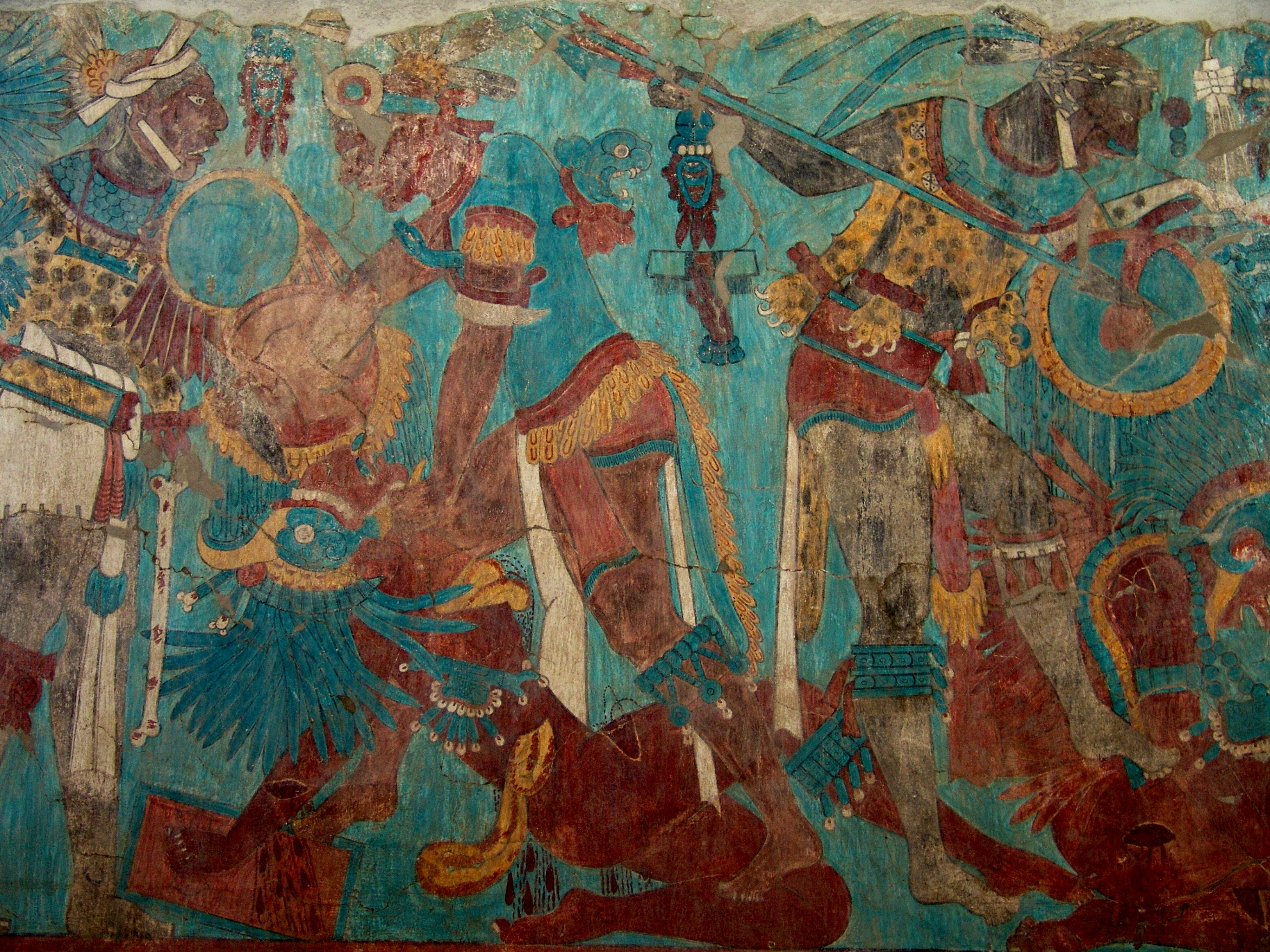
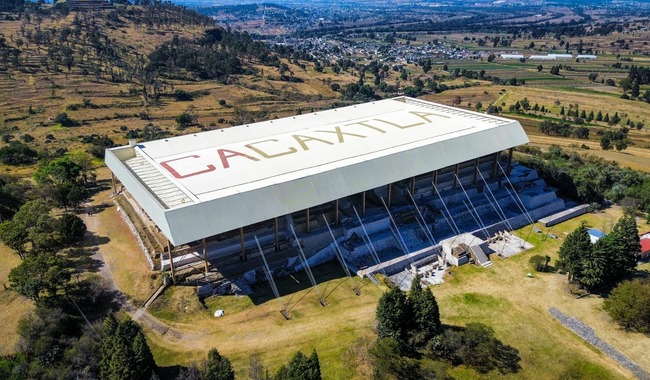
At the top of Tlaxcala's "El Gran Basamento" (The Great Foundation), the pre-Hispanic city of Cacaxtla houses some of the most extraordinary murals of ancient Mexico. This archaeological site is one of the most fascinating destinations in the center of the country. It is a place where art, religion, and political power were captured on walls that today reveal the secrets of a civilization.
The ancient citadel was an important ceremonial and political center dominated by the Olmec-Xicalan people between the 7th and 9th centuries. The group consolidated its power in the region after the fall of Teotihuacan and, from their strategic position, controlled trade routes and left behind an artistic legacy.
ALSO READ: Tourist attractions you must visit in Tlaxcala, Mexico's great natural and cultural treasure
Why visit Cacaxtla, the pre-Hispanic city in Tlaxcala that holds the secrets of Mesoamerica?
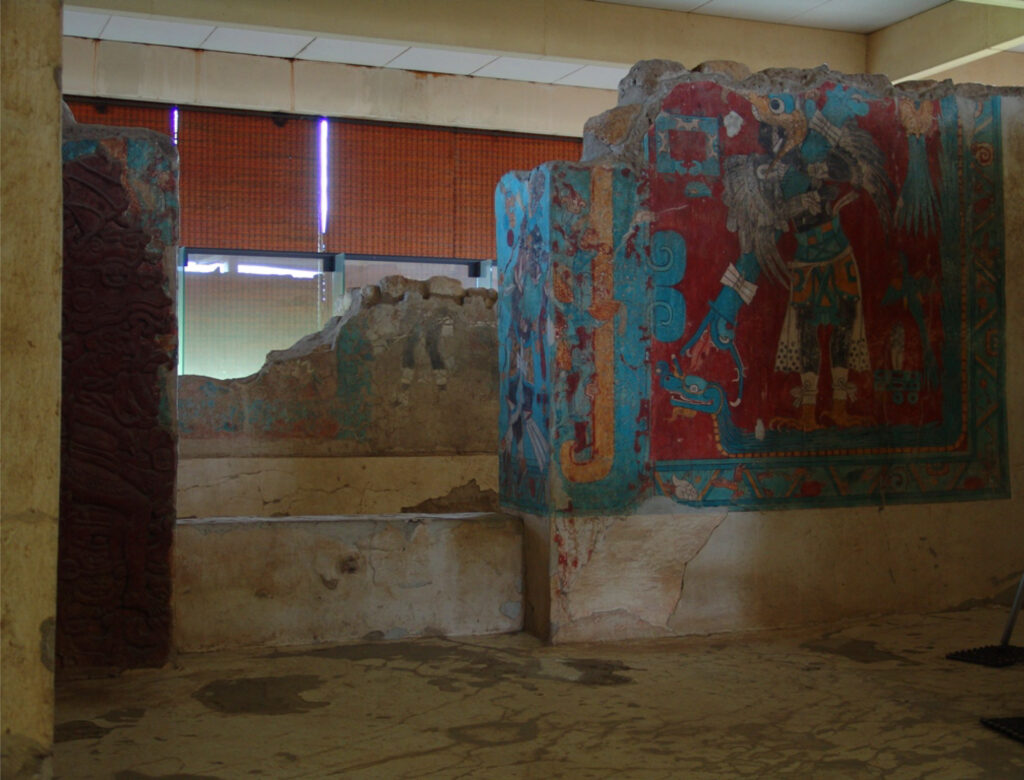
The site's main attraction is its murals, considered among the best preserved in Mesoamerica. Among them is the famous Battle Mural, an impressive scene where warriors dressed in symbolic costumes face off in a visual narrative full of movement, symbolism, and color.
The paintings also depict figures associated with ancient Mesoamerican deities, such as Tláloc and Quetzalcóatl, reflecting the deep connection between daily life, religion, and political power in this ancient city.
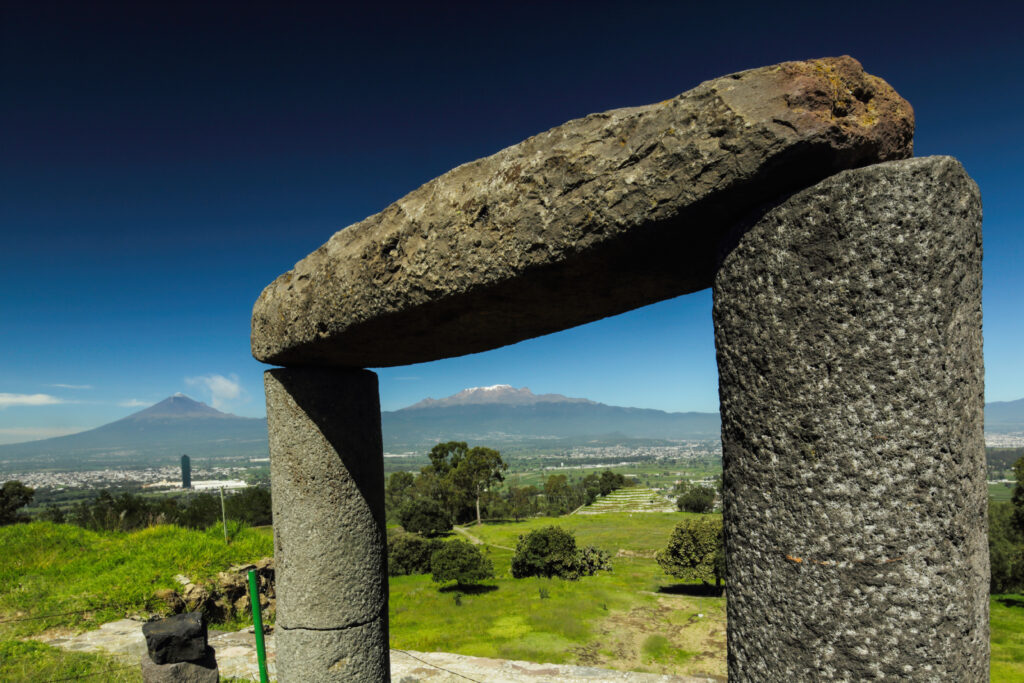
From this point, it is possible to appreciate the natural environment surrounding the city. On clear days, it is possible to see Popocatépetl and Iztaccíhuatl.
How much is admission and how do I get there?
- General admission (domestic visitors): $105 pesos.
- Foreign visitors: $210 pesos.
- On Sundays, admission is free for Mexican citizens with identification.
To reach the ancient city, you will need to drive for 30–35 minutes by car. The site is located in the municipality of Nativitas, Tlaxcala, near San Miguel del Milagro.
If you are staying in Mexico City and want to visit this site, take the Mexico–Puebla federal highway (150) to San Martín Texmelucan. Then drive towards Xalmimilulco and San Miguel Xochitecatitla. Both routes are very direct and will take you to one of the most magical places in the country.
ALSO READ: Huamantla: living traditions and volcanic landscapes in the heart of Tlaxcala
Xochitécatl, an ancient city near Cacaxtla
A visit to the site is often complemented by a trip to the nearby ceremonial center of the Xochitécatl Archaeological Zone, where ancient pyramids dedicated to the worship of fertility and feminine energy serve as a reminder that this region was once an important spiritual and cultural hub.
It reached its peak between approximately 600 BC and 900 AD. It was an important ritual center prior to the development of Cacaxtla, as evidenced by archaeological findings made over time.
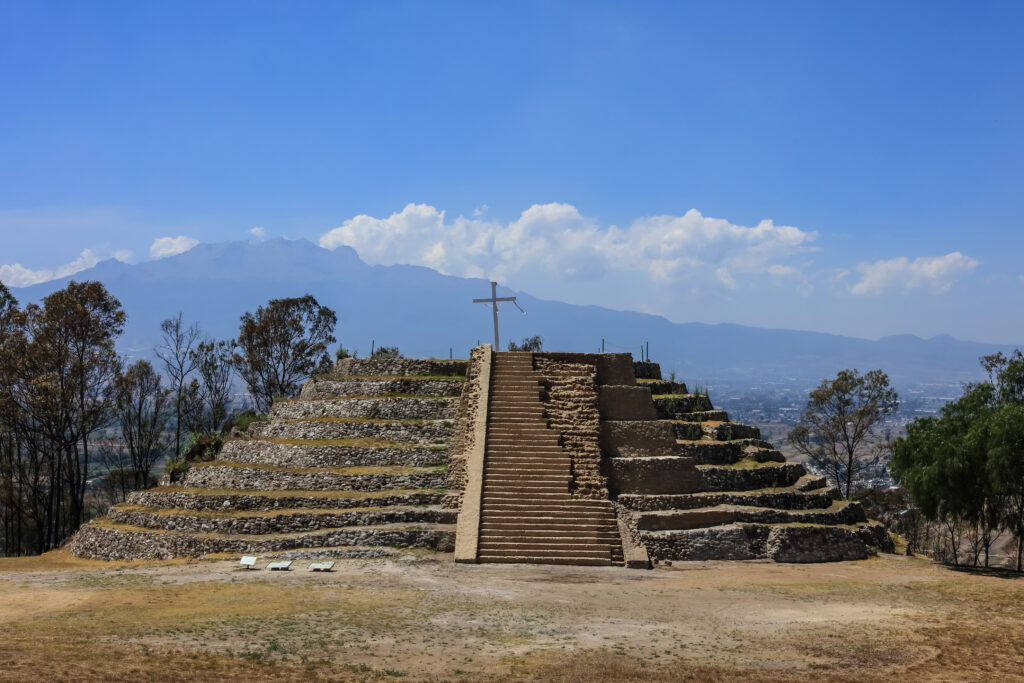
Among the most important discoveries are more than a hundred female clay figurines. Many of the representations were pregnant, reinforcing the hypothesis of the cult of the goddess of fertility and life. The monumental structures that you should not miss are:
- Pyramid of Flowers
- Pyramid of the Serpent
- The Spiral
Huamantla: your next destination buzzing with Mexican tourism
Once you have discovered the charm of Cacaxtla, your next destination among the treasures of Tlaxcala is Huamantla. It is one of the state's Pueblos Mágicos (Magical Towns) thanks to its peaceful, cultural atmosphere steeped in tradition.
Its most important event is "La Noche que Nadie Duerme"(The Night Nobody Sleeps), which is celebrated in August during the festival dedicated to the Virgin of Charity. The inhabitants cover the streets with impressive carpets made of flowers, seeds, and colored sawdust.
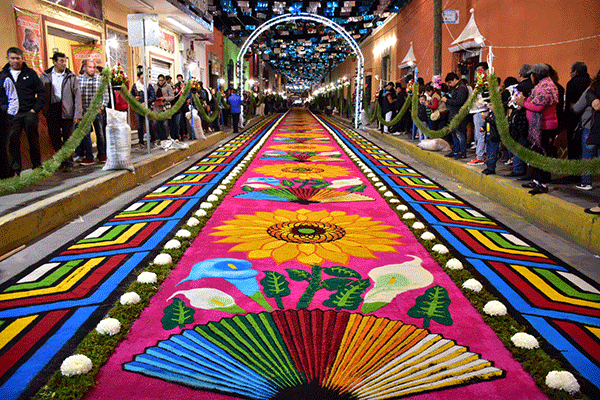
These ephemeral works are prepared throughout the night to welcome the religious procession at dawn. The result is a visual and spiritual experience that is difficult to find anywhere else in Mexico.
Continue exploring Mexico with us and discover more information about the hotels, accommodations, and other amenities that Tlaxcala has to offer.